CASE STUDY
NEXCO Central
In 2021, Milligan partnered with NEXCO Central on a series of research and advisory engagements to help shape the future of toll road and traffic management operations in Japan. Through comprehensive research, international benchmarking, and hands-on collaboration with leading U.S. toll agencies, our team delivered actionable insights that supported NEXCO’s goal of developing and enhancing in-house tolling and traffic management solutions.
CLIENT
NEXCO Central
LOCATION
Japan
PARTNERS
North Texas Tollway Authority (NTTA), E-470 Public Highway Authority
SERVICE
Research, Market Analysis
TASKS PERFORMED
Market & Technology Research
Technical Analysis
Site Visit Coordination & Facilitations
Operations Workshops
Strategic Recommendations



2
site visits to U.S. tolling agencies
4
projects completed
4
years of professional
engagement


Challenge
NEXCO Central manages one of the world’s most critical and complex expressway networks and was seeking ways to enhance system operations, safety, maintenance, and performance. To ensure that NEXCO remained at the forefront of technological advancements, and to inform future investments, leadership needed a clear, practical understanding of how peer agencies approach toll system design, electronic toll collection methods, advanced traffic management systems, maintenance strategies, and incident response.
The challenge was turning a broad landscape of international practices into focused guidance that could be applied within NEXCO Central’s existing operational framework.
Approach
The Milligan team designed and led several structured, multi-phase research efforts that combined technical expertise with direct engagement across the tolling industry:
Industry Research & Analysis: Conducted in-depth research on U.S. toll system architectures, tolling technologies, infrastructure planning, back-office operations, maintenance criteria, and violation processing practices.
Agency Interviews & Knowledge Capture: Designed and facilitated virtual interview programs with multiple toll agencies to capture real-world insights into operations, system performance, and all-electronic conversions.
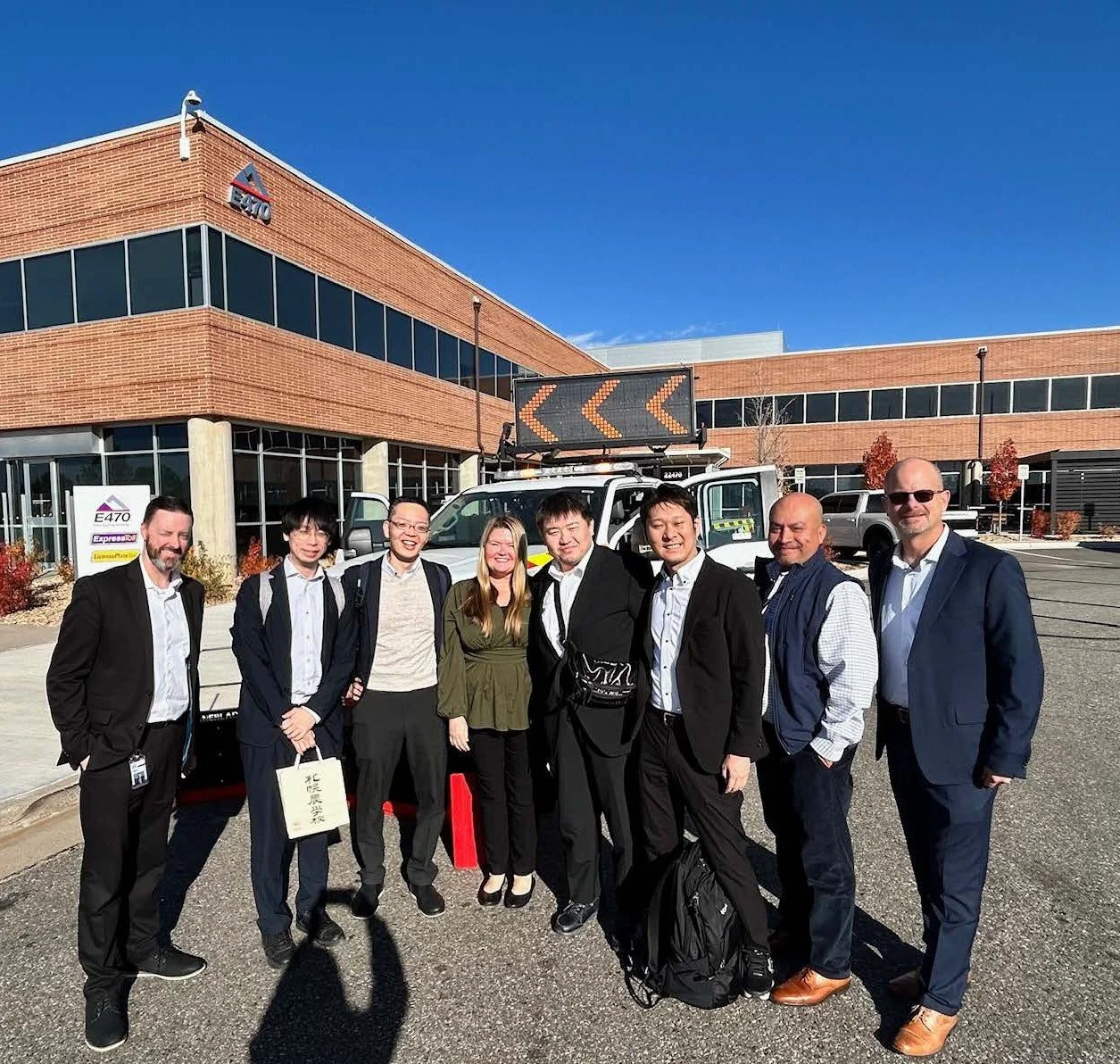
On-Site Engagements: Coordinated and led site visits for NEXCO teams to visit and tour U.S. Traffic Management Centers (TMCs), and Safety Operations Centers (SOCs), providing first-hand exposure to daily operations and decision-making processes.
Targeted Research Domains: Delivered focused research on electronic toll collection system improvements and advanced traffic management systems, including response times, lane block clearance strategies, and traveler information tools.
Workshops & Collaborative Sessions: Facilitated technical workshops with agencies such as the North Texas Tollway Authority (NTTA) and the E-470 Public Highway Authority, enabling open dialogue around NEXCO’s operational pain points and potential technology-driven solutions.
Specialized Case Studies: Completed international case studies on reversible lane operations in the U.S. and Europe, including site visits and evaluations of supporting equipment and technologies.
Results
The result of this years-long, multi-phase effort was a comprehensive library of research, case studies, and practical tools and technologies documenting best practices in tolling and traffic management from leading agencies worldwide. The final reports not only captured key findings, but also provided prioritized recommendations aligned with NEXCO Central’s goals for operational efficiency, system reliability, and technology modernization, informing strategic planning and technology-driven decision-making.
This work illustrates how we help transportation agencies move from reactive system upgrades to proactive, innovation-led investment strategies. By grounding future initiatives in global best practices and aligning technology modernization with long-term operational and financial objectives, we guide clients in adopting proven approaches to congestion mitigation, driver safety, system maintenance, and operational performance, which builds resilience, improves user experience, and enables sustainable performance gains in an increasingly digital mobility ecosystem.